.svg "2Win logo25 white (1)")


 2Win!
2Win!
How AE/SE Pairs Build the Chemistry Buyers Notice
Discover how effective AE/SE partnerships enhance buyer chemistry and drive successful sales outcomes through strategic planning and collaboration.
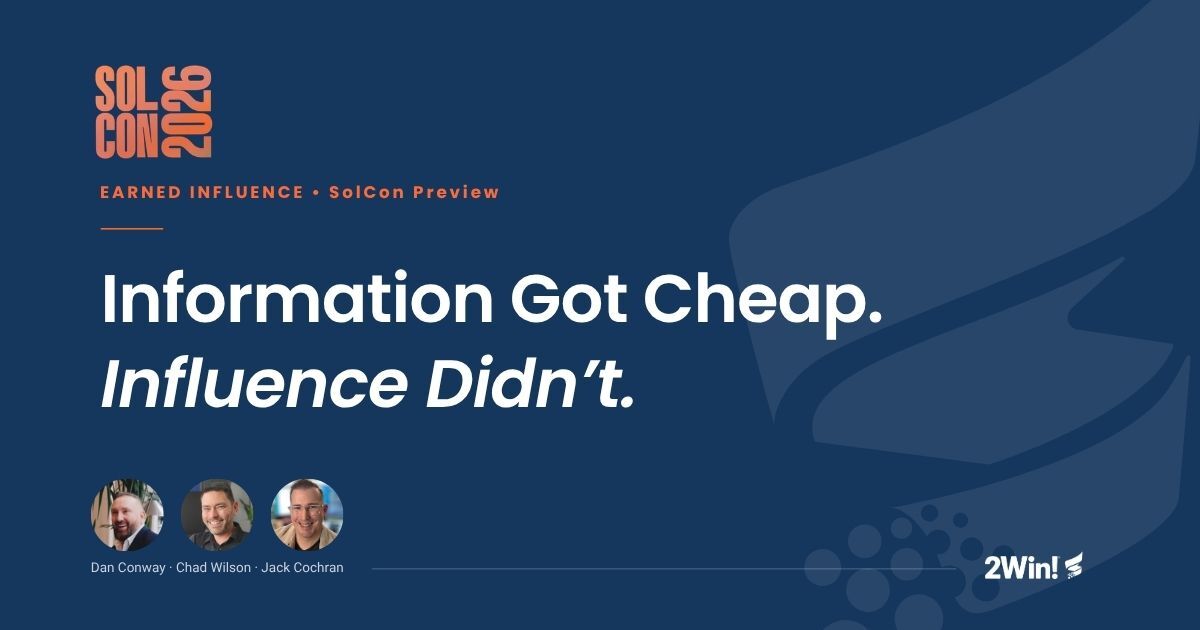
Three pillars of earned influence, from a conversation with Dan Conway, Chad Wilson, and Jack Cochran ahead of SOLCON 2026. Watch the full recap.
Nobody hands you a title that makes people listen. And plenty of people who already have the title still walk into rooms where nobody does.
That was the premise behind Earned Influence: Leading Before You Have the Title, a session we ran with Dan Conway (CEO, 2Win! Global), Chad Wilson (COO and Go-to-Market Transformation Lead, 2Win! Global), and Jack Cochran (General Manager, Presales Collective). It previewed one of the breakout sessions 2Win is bringing to the leadership track at SOLCON 2026, and it produced more usable material in an hour than most sessions manage in a day.
The frame holding it together is simple enough to state in a sentence. Information has become a commodity, and influence has become the currency. Six pillars build that currency, and we went deep on three of them.
The six pillars of earned influence: clarity, trustworthiness, intentionality, credibility, curiosity, and courage.
Jack has seen this across hundreds of companies; everyone is being asked to do more with less, which is not new. What is new is that presales is simultaneously absorbing work that used to belong to other functions: post-sale responsibilities, adoption, direct accountability for revenue rather than just for the technical win.
You would expect those two forces to cancel each other out, but they don't. Teams are being asked to move faster with fewer people while learning job capabilities they have never had to think about before.
Chad added the tension underneath it that fewer people are naming. The scarcity isn't information, and it isn't even headcount. It's time with the people you're trying to influence. Buyers arrive later in the cycle, having done their own research, carrying a point of view they hold with conviction whether or not that point of view is correct. Presales gets handed the job of setting the record straight, with less room to do it than ever.
A solutions professional has to know their market and their product well enough to say something in a client conversation that the buyer genuinely can't get anywhere else. Buyers spend time with people who give them value. If you're just repeating what they already found in their own research, the time you get keeps shrinking.
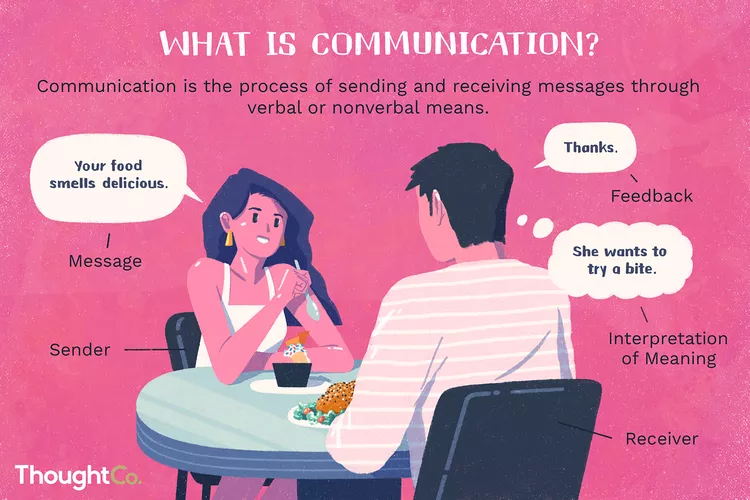
Credit: ThoughtCo / Ran Zheng
Ask people whether they communicate clearly, and almost all of them say yes. Dan points out that communication, no matter how clear we think it is, gets internalized by the receiver's thoughts and beliefs, and can get, well... lost in translation.
Where does clarity actually break down? Dan puts it in prep. You already know your product, you believe you know your client, and so you skip the work of deciding what you're trying to land before you walk in.
AI has made that easier to skip. Chad described the result as a sea of sameness: a lot of sellers using similar models to do similar work, producing similar outputs, all sounding the same. When people outsource the thinking rather than the drafting, what comes back isn't clarity. It's more information from a credible-sounding source that may contradict information the buyer got from another credible-sounding source.
That doesn't speed a deal up. It creates confusion, and confusion is what turns into no decision.
Chad has a story that shows how expensive this gets. Selling public safety ERP software, his team started bringing their professional services director into multi-day demos for a 45-minute segment. They prepped him carefully. He understood the assignment intellectually.
Then he stood up and spoke in PMO and project-control language to a room of public safety and public administration professionals, none of whom ran a PMO.
This was someone with a real track record leading eight-figure technology projects. He should have walked out of that room with enormous credibility. Instead, the audience was confused, and the team had to spend valuable time repairing it.
Dan put it this way: when you deliver without clarity, it hits your credibility, and you usually don't notice it happening. The client just starts seeing you a little differently.
Clarity is not only about how well you communicate. It's about whether you listened first.
"If you don't stop to listen, what you know doesn't matter."
-Jack Cochran
Jack pointed out that nearly every onboarding plan and ramp program he sees is built around the talking part, with almost nothing on the listening part.
Chad had just reviewed a client call recording where the rep said "Here's the solutions consultant, take it away," and that person then spoke for 42 minutes without a single check-in.
Jack once prepped a detailed half-hour walkthrough for an account, then decided to verify a few things first because he hadn't spoken to the customer directly. He asked a couple of questions. By the time it was his turn to present, his entire speaking role was to say "yes," and the meeting ended early, with everyone satisfied. Had he run the half hour as planned, he'd have wasted their time and his own.
So the apparent conflict between moving fast and slowing down to listen mostly dissolves. Slowing down at the front is frequently what saves the time.
The practical return on trustworthiness is that people stop checking your work. The approval layer comes off. The follow-up ping doesn't arrive. Chad connected this to Stephen M. R. Covey's The Speed of Trust: where trust is high, inspection points disappear, because everyone already believes you'll do what you said.
Dan spent 15 years at SunGard selling into the public sector, where the stakes are public safety and public administration, and the tolerance for an untrustworthy vendor is zero. His framing is that trustworthiness is both seen and felt, and teams tend to focus on only one. The track record is clear: you deliver what you said you'd deliver, visibly, from the first interaction. Felt is whether the buyer believes you actually care about their outcome. Both have to be there.
The question that came up next is worth repeating, because it comes up in every workshop: is this framework built for people with direct, assertive personalities?
Chad's answer was: trust is granted by the other person, not built by the person seeking it, which makes trust-building an act of service. This person is a direct, logical communicator by temperament, and when the person across from him works the same way, that helps him. When they don't, the burden is on the other person to adjust. Not to put on a mask, but to meet how they're actually thinking.
Dan pushed it up a level. The culture you build internally carries into the culture you build with your customer, whether or not you intend it. So the question for your team is which one you're actually optimizing for: building trust, or getting demos done and deals closed. That shows up in what you ask clients. Do you find out what actually matters to them, or only say the things that move you toward signature?
Jack points out: you can be cordial and still backstab someone. You can be cordial and trust no one. Respect is a different thing, and it's what lets a team disagree hard and still move. Customers read the room better than sales teams assume. They can tell when four people on a pitch don't like each other, and as Jack put it, once a customer smells toxicity on your team, the deal is effectively over.
This is where influence stops being a feeling and starts producing motion. Intentionality means knowing what the next step is and securing it.
Jack treats it as the clearest divider between junior and senior, and it's what he looked for when hiring. People early in presales tend to chase technical depth, aiming to be the most knowledgeable person in the room. That ceiling arrives fast, and the customer usually has the information anyway. His line for anyone still building their career around product mastery alone: if the software sold itself, there wouldn't be a sales team, and you'd be a pamphlet rather than a person on a salary.
Chad's example of intentionality under pressure came from an RFP in a new territory with no existing relationship. Three-day engagement, 300 people in the audience, and within the first hour it was obvious they were going to lose. The consultant who wrote the RFP hadn't written it for this customer.
So they stopped. They brought the leadership team down to the front, interviewed them live, whiteboarded their actual processes, found what was broken, and rebuilt the remaining two-plus days around what they'd just heard. It alienated the consultant, who told them they couldn't do that. Chad asked the sheriff, the senior executive in the room, whether continuing as planned was worth anyone's time. The sheriff told them to go for it. They won an eight-figure deal.
Early in Dan's sales career, a demo was losing the room, and the city manager walked out. Dan got up, followed him into the hallway, and asked directly whether they were off. They were. That one conversation reset the entire engagement, and they won.
Chad added, "The plane that lands well doesn't make the news." Intentionality is mostly clear next steps executed with no fanfare, a well-understood close managed jointly with the customer. Those aren't the interesting stories, and they're what you actually want.
One number worth carrying into your next deal review: Dan put the average buying group at 11 to 13 stakeholders, and mentioned a client last week who mapped 15. Expect several skeptics in that group and plan for them deliberately.
We closed with a lightning round. What's the most common shortcut, and why does it fall apart?
Dan named "borrowed authority." Walking in and referencing what some other executive said, in order to establish a point of view you haven't done the work to hold. The borrowed position collapses the moment anyone disagrees with it, because you don't have the reasoning underneath to defend it.
Chad named "that's not my job." He almost never hears it from people who go on to have real influence, whether or not they end up managing anyone. Saying it tells everyone in earshot that you don't care enough to help solve the problem in front of you.
Jack named "faked curiosity." The tell is leading the question: steering someone toward the answer you've already decided on rather than actually wanting to know theirs. People detect it every time.
Clarity, trustworthiness, and intentionality were three of six. Credibility, curiosity, and courage are the rest, and they're on the agenda for the full breakout session.
2Win is bringing multiple hands-on sessions to SOLCON 2026 in Chicago on August 26 and 27, alongside Presales Collective. Chad is leading three of them, and Dan is delivering the closing keynote, "The 10,000-Conversation Advantage: Why Presales Gets More Valuable in the Age of AI."If the hour above was useful, the room will be better.

Zheng, R. (n.d.). What is communication? [Infographic illustrating the communication process]. ThoughtCo. https://www.thoughtco.com/what-is-communication-1689877
Discover how effective AE/SE partnerships enhance buyer chemistry and drive successful sales outcomes through strategic planning and collaboration.
Virtual training is everywhere but great virtual training is rare. What to look for and how to find it with this checklist.
Sales kickoff 2022 is right around the corner! Find the best keynote speaker for your business to bring your Sales Kickoff theme to the next level!